‘Super Moon’ Across The World.
-
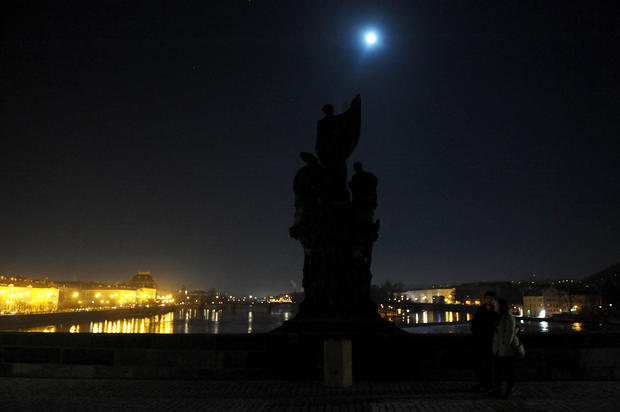
Full Moon in Prague
(credit: Michal Cizek/AFP/Getty Images)
The full moon is seen behind a statue standing on the Charles Bridge, early on March 20, 2011, in Prague. The full moon coincided with its closest approach to the Earth, 221,565 miles (356,575 km), making the so-called "super moon" look slightly larger than average.
-
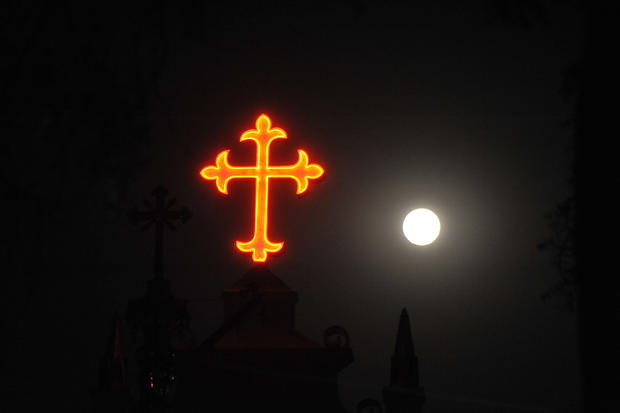
Full Moon in Hyderabad
(credit: Noah Seelam/AFP/Getty Images)
The full moon rises behind the cross of a church in Hyderabad on March 19, 2011. Full Moons vary in size because of the oval shape of the Moon's orbit. It is an ellipse with one side (perigee) about 50,000 km closer to Earth than the other (apogee). Nearby perigee moons are about 14 percent bigger and 30 percent brighter than lesser moons that occur on the apogee side of the Moon's orbit. According to The US Naval Observatory in Washington, D.C. "The full Moon of March 19 occurs less than one hour away from perigee -- a near-perfect coincidence that happens only 18 years or so."
-
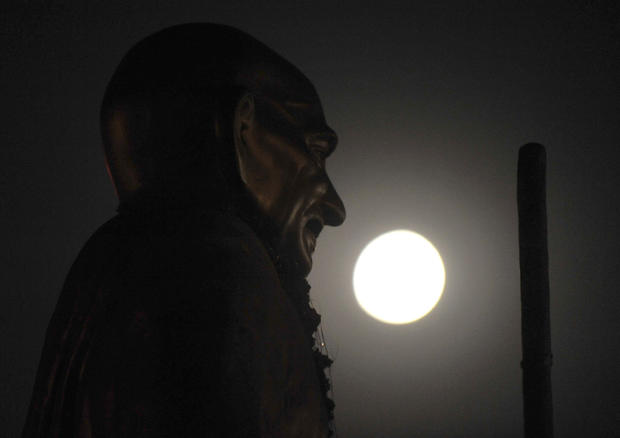
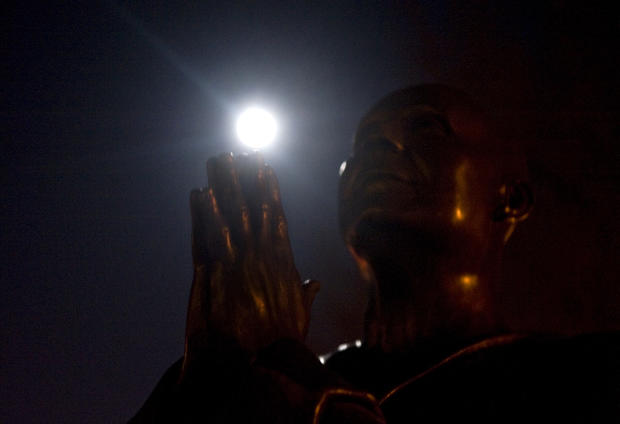
Full Moon in Hyderabad
(credit: Noah Seelam/AFP/Getty Images)
The full moon rises behind the statue of Mahathma Gandhi in Hyderabad on March 19, 2011. Full Moons vary in size because of the oval shape of the Moon's orbit. It is an ellipse with one side (perigee) about 50,000 km closer to Earth than the other (apogee). Nearby perigee moons are about 14 percent bigger and 30 percent brighter than lesser moons that occur on the apogee side of the Moon's orbit. According to US Naval Observatory in Washington, D.C. "The full Moon of March 19 occurs less than one hour away from perigee -- a near-perfect coincidence that happens only 18 years or so."
-
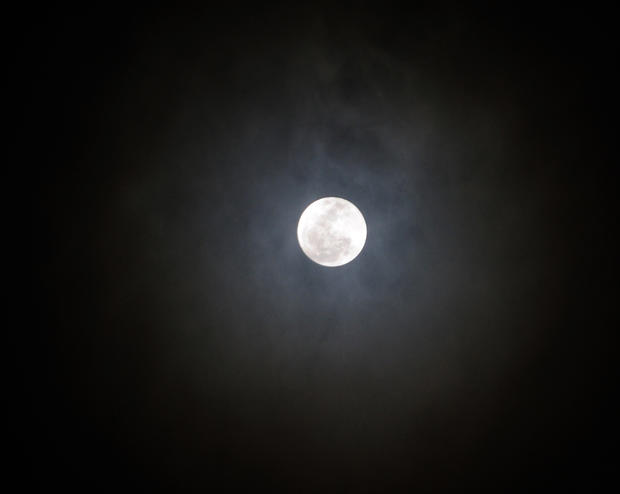
Super Moon in Manila
(credit: Ted Aljibe/AFP/Getty Images)
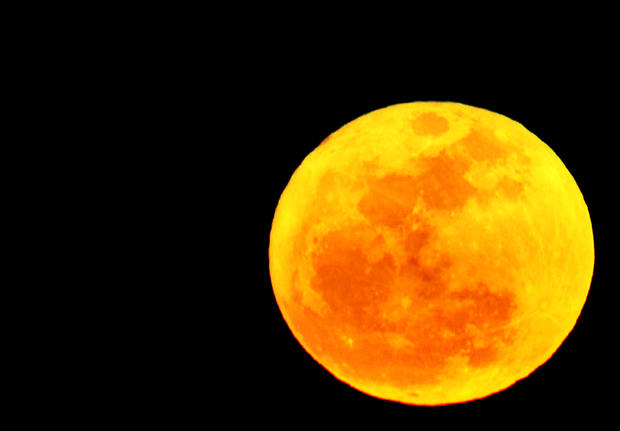
The "supermoon" as seen in Manila on March 19, 2011. According to experts, the supermoon phenomenon, shows as the moon reaches its closest point to the earth.
-
Super Moon in Manila
(credit: Ted Aljibe/AFP/Getty Images)
The "supermoon" as seen in Manila on March 19, 2011. According to experts, the supermoon phenomenon, shows as the moon reaches its closest point to the earth.
-
Full moon rises over rooftops in New York
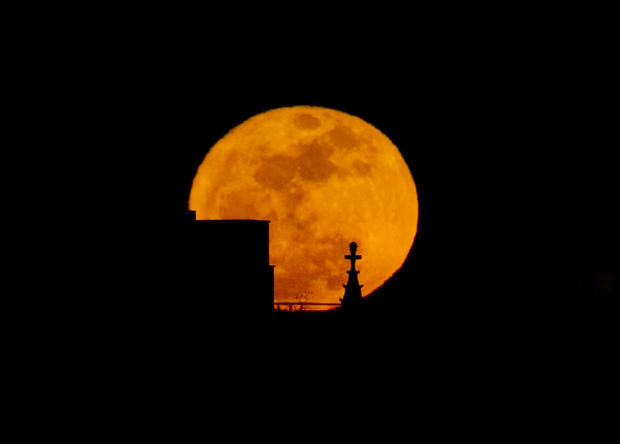
(credit: Stan Honda/AFP/Getty Images)
The full moon rises over rooftops March 19, 2011 in this view from the east side of Manhattan in New York. The full moon coincided with its closest approach to the Earth, 221,565 miles (356,575 km), making the so-called "super moon" look slightly larger than average.
-
The full moon rises over the East River
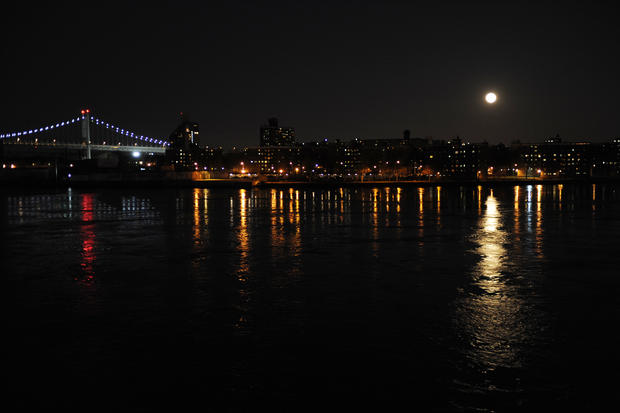
(credit: Stan Honda/AFP/Getty Images)
The full moon rises over the East River March 19, 2011 in this view from the east side of Manhattan in New York. The full moon coincided with its closest approach to the Earth, 221,565 miles (356,575 km), making the so-called "super moon" look slightly larger than average.
-
Biggest Moon In Almost 20 Years Rises In D.C.
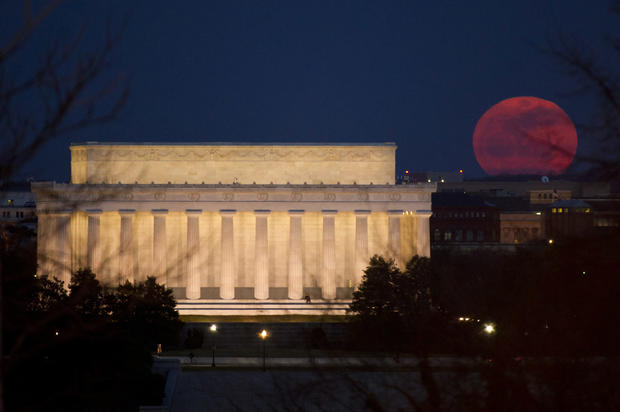
(credit: Bill Ingalls/NASA via Getty Images)
In this handout photo provided by NASA, the full moon is seen as it rises near the Lincoln Memorial, March 19, 201, in Washington, DC. The full moon tonight is called a "Super Perigee Moon" since it is at it's closest to Earth in 2011. The last full moon so big and close to Earth occurred in March of 1993.
-
A perigee moon rises in Washington, D.C.
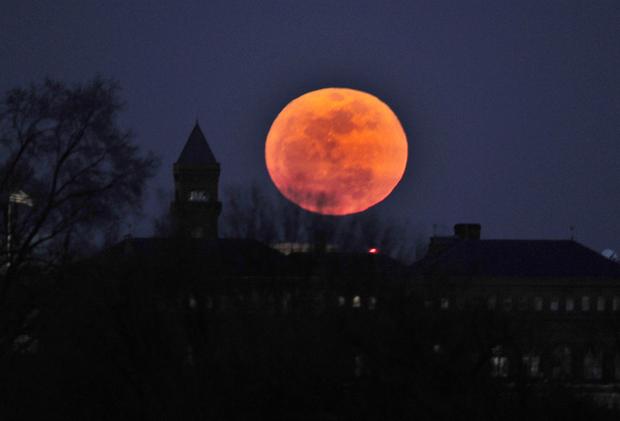
(credit: Jewel Samad/AFP/Getty Images)
A perigee moon rises in Washington, DC, on March 19, 2011. A perigee moon is visible when the moon's orbit position is at its closest point to Earth during a full moon phase. The full moon coincided with its closest approach to the Earth, 221,565 miles (356,575 km), making the so-called "super moon" look slightly larger than average.
-
Perigee moon in San Salvador, El Salvador
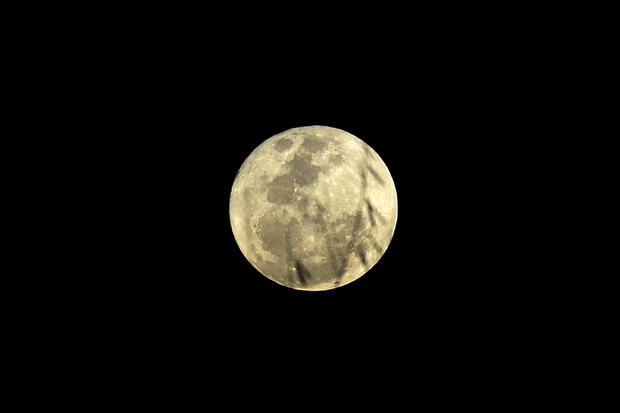
(credit: Jose Cabezas/AFP/Getty Images)
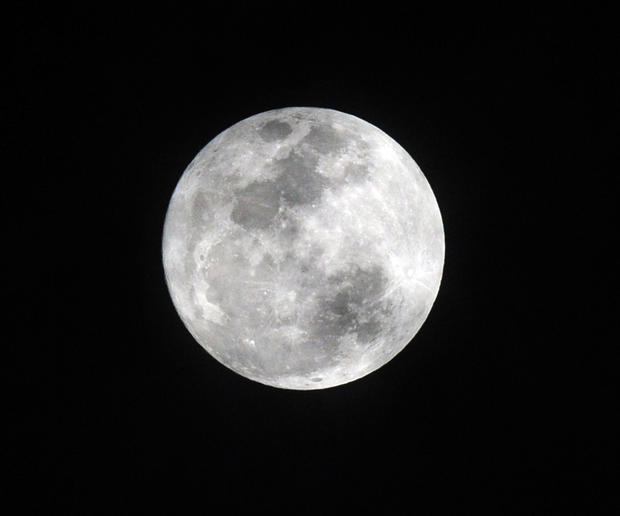
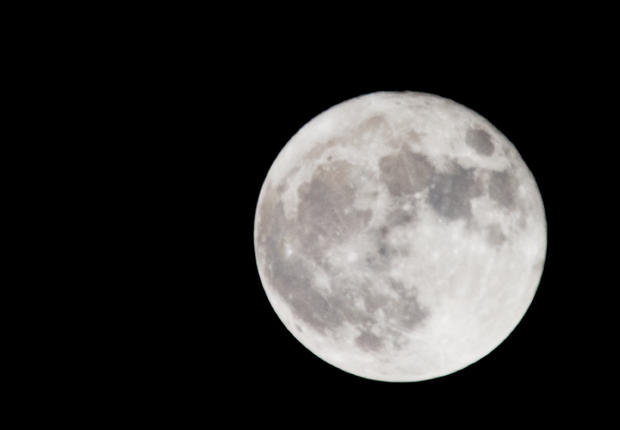
A perigee moon is seen in the sky above San Salvador, El Salvador on March 19, 2011. A perigee moon is visible when the moon's orbit position is at its closest point to Earth during a full moon phase.
-
Super Moon in Washington, D.C.
(credit: Jewel Samad/AFP/Getty Images)
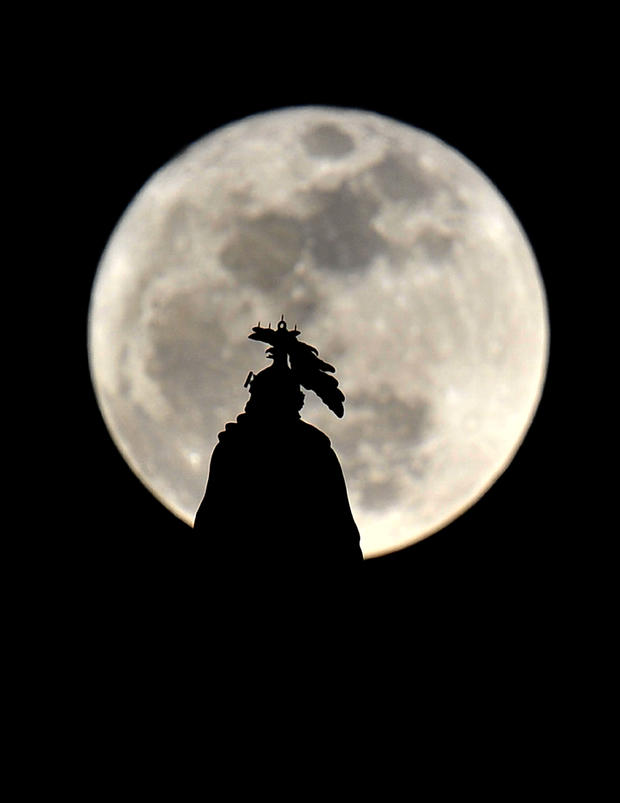
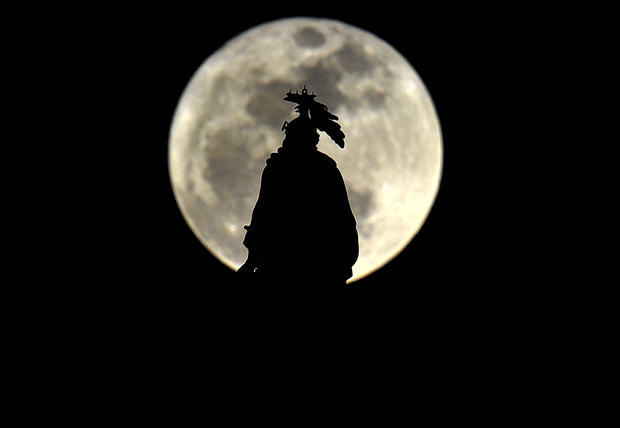
The statue of freedom, ontop of the US Capitol Hill is pictured against a perigee moon as it rises in Washington, DC, on March 19, 2011. A perigee moon is visible when the moon's orbit position is at its closest point to Earth during a full moon phase. The full moon coincided with its closest approach to the Earth, 221,565 miles (356,575 km), making the so-called "super moon" look slightly larger than average.
-
Super Moon in Washington, D.C.
(credit: Jewel Samad/AFP/Getty Images)
A perigee moon rises in Washington, DC, on March 19, 2011. A perigee moon is visible when the moon's orbit position is at its closest point to Earth during a full moon phase. The full moon coincided with its closest approach to the Earth, 221,565 miles (356,575 km), making the so-called "super moon" look slightly larger than average.
-
Super Moon in Washington, D.C.
(credit: Jewel Samad/AFP/Getty Images)
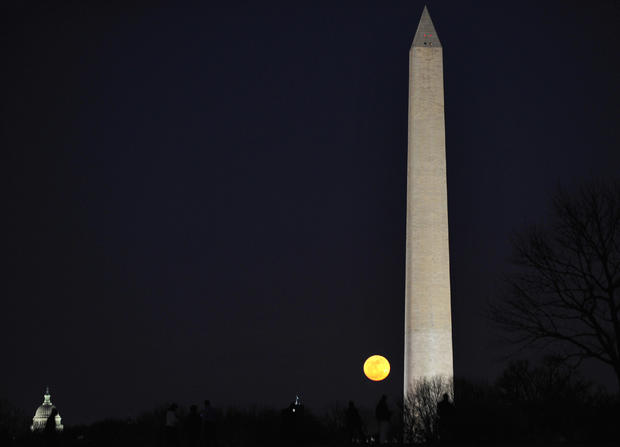
A perigee moon rises next to the National Monument and the Capitol Hill in Washington, DC, on March 19, 2011. A perigee moon is visible when the moon's orbit position is at its closest point to Earth during a full moon phase. The full moon coincided with its closest approach to the Earth, 221,565 miles (356,575 km), making the so-called "super moon" look slightly larger than average.
-
Super Moon in Washington, D.C.
(credit: Jewel Samad/AFP/Getty Images)
The statue of freedom, ontop of the US Capitol Hill is pictured against a perigee moon as it rises in Washington, DC, on March 19, 2011. A perigee moon is visible when the moon's orbit position is at its closest point to Earth during a full moon phase. The full moon coincided with its closest approach to the Earth, 221,565 miles (356,575 km), making the so-called "super moon" look slightly larger than average.
-
Super Moon in Namur
(credit: Bruno Fahy/AFP/Getty Images)
A full perigee moon, the biggest full moon phase for in almost 20 years, rises over Namur on March 19, 2011. A perigee moon is visible when the moon's orbit position is at its closest point to Earth during a full moon phase.
-
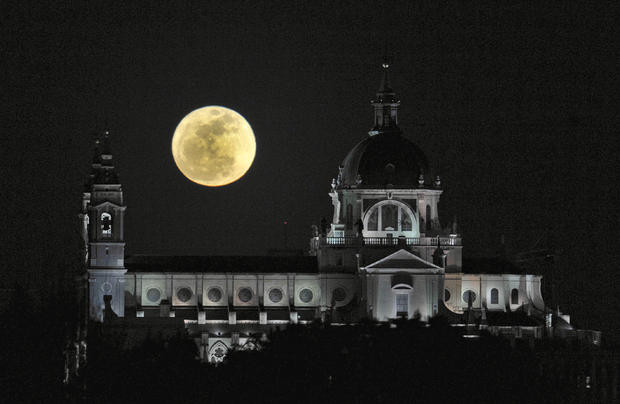
Super Moon in Madrid
(credit: Pedro Armestre/AFP/Getty Images)
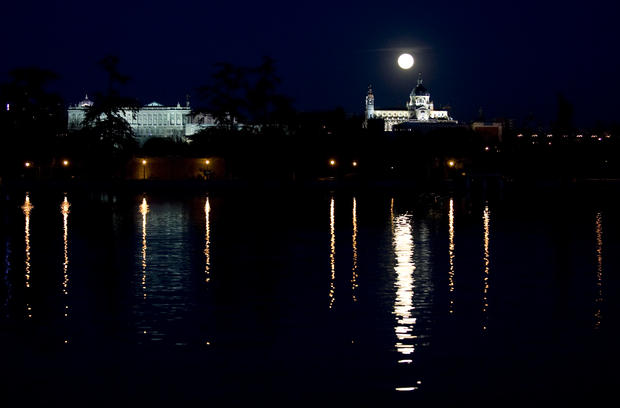
A perigee moon rises above the Almudena Cathedral viewed from the lake of "cottage" in Madrid on March 19, 2011. A perigee moon is visible when the moon's orbit position is at its closest point to Earth during a full moon phase.
-
Super Moon in Chevy Chase, Maryland
(credit: Mandel Ngan/AFP/Getty Images)
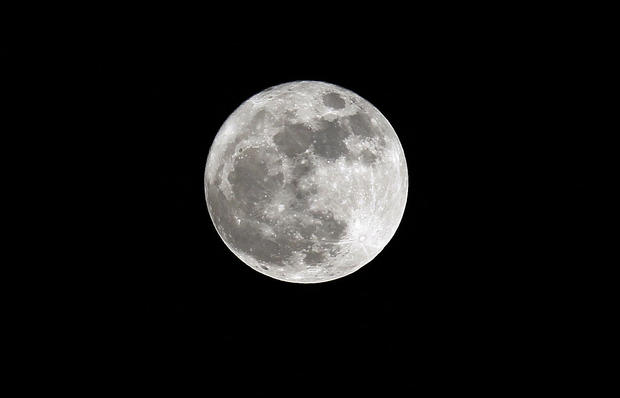
A March 20, 2011 photo taken shows the moon seen from Chevy Chase, Maryland. The moon is in its closest orbit to Earth, at 356,577 Kms away, the closest in 18 years.
-
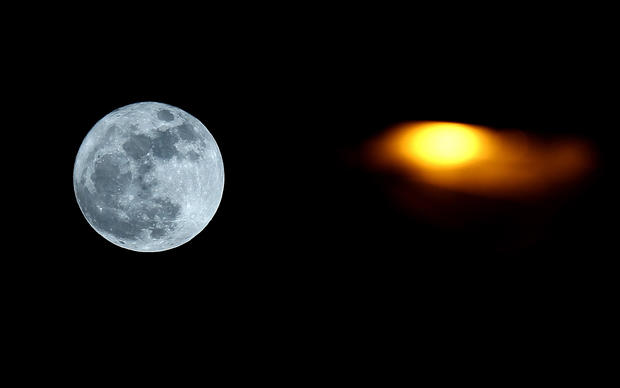
A full perigee moon in Namur
(credit: Bruno Fahy/AFP/Getty Images)
A full perigee moon, the biggest full moon phase for in almost 20 years, rises over Namur on March 19, 2011. A perigee moon is visible when the moon's orbit position is at its closest point to Earth during a full moon phase. Yellow light on right emnanates from a roadside lampost.
-
A perigee moon rises above the Almudena Cathedral
(credit: Pedro Armestre/AFP/Getty Images)
A perigee moon rises above the Almudena Cathedral in Madrid on March 19, 2011. A perigee moon is visible when the moon's orbit position is at its closest point to Earth during a full moon phase.
-
Super Moon at Mala Strana in Prague
(credit Michal Cizek/AFP/Getty Images)
The full moon is seen behind a bronze statue standing on the left bank of Vltava river on Mala Strana Prague's quarter early on March 20, 2011. The full moon coincided with its closest approach to the Earth, 221,565 miles (356,575 km), making the so-called "super moon" look slightly larger than average.
-
Next Gallery:Hennepin County's Most Wanted